Risk-free spatial tasks
Complex procedures can be practised and reviewed in a virtual copy of the environment, away from live equipment and production schedules.
Fully immersive virtual environments built for specialized operational workflows and remote collaboration.
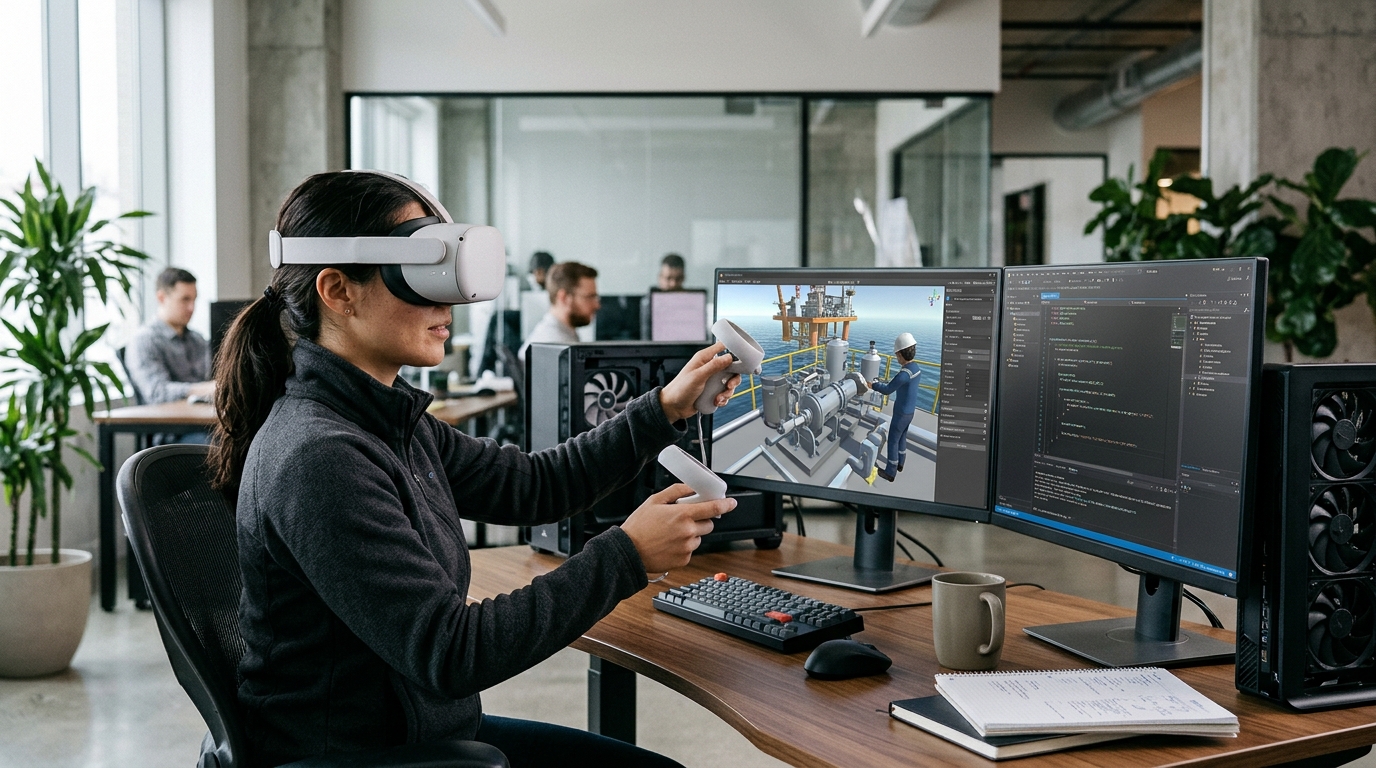
Illustrative industry photo, not a GridNest Inc project.
Some decisions are easier to make standing inside the space. We develop virtual reality software that recreates facilities, equipment and procedures at true scale, so teams can rehearse, review and plan together without being in the same location or interrupting live operations.
Complex procedures can be practised and reviewed in a virtual copy of the environment, away from live equipment and production schedules.
Distributed teams can meet inside the same virtual space to walk through layouts, sequences and changes before committing to them.
Seeing equipment and spaces at their real proportions helps stakeholders spot clearance, access and ergonomic issues early.
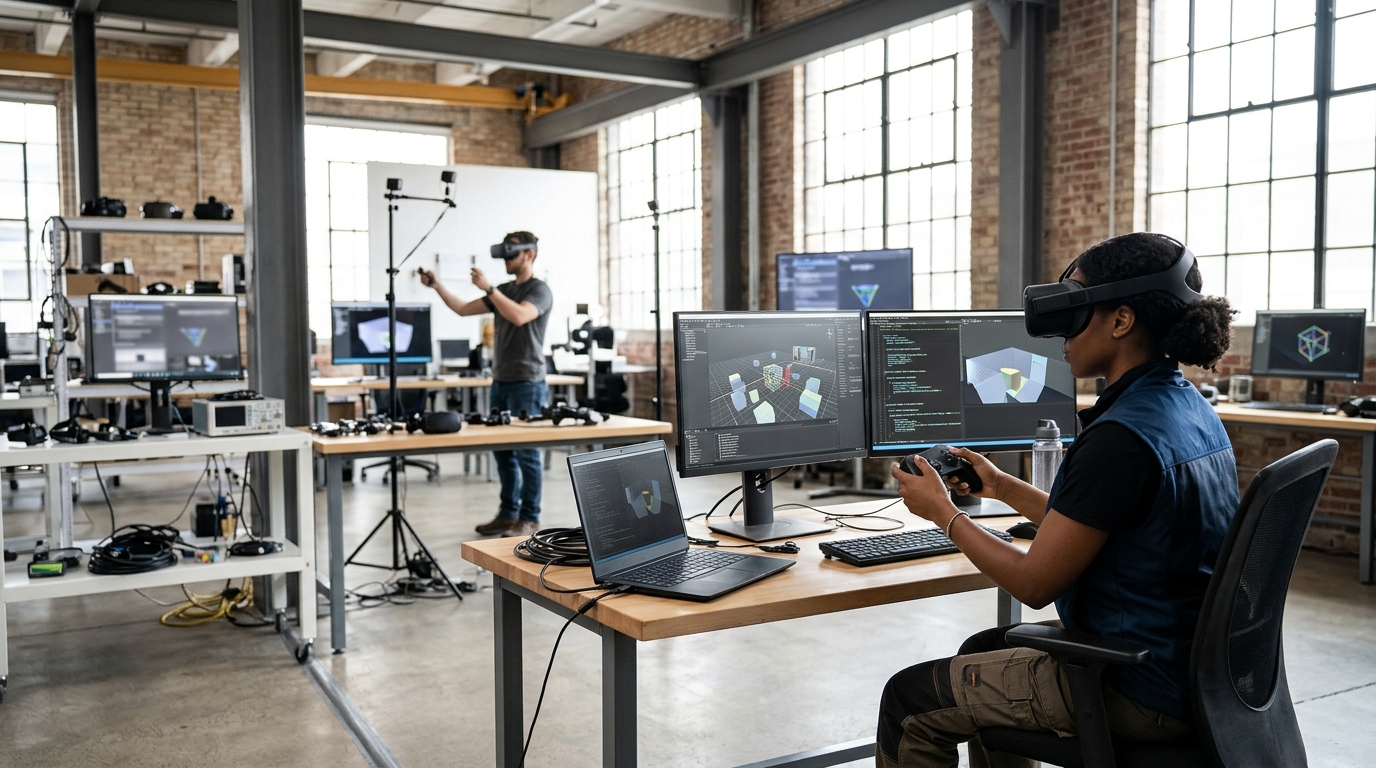
When a procedure is performed only occasionally, teams often lose familiarity between occurrences. A VR environment of the relevant area lets crews walk through the sequence, confirm access routes and discuss roles ahead of time. We typically begin with a focused scope, validate it with the people who perform the work, then extend it.
Related: Immersive Simulation ExperiencesEnables risk-free simulation of complex spatial tasks and collaborative planning.
Engagements generally follow consultation, prototyping, development and deployment. Scope and pace are agreed with you at the start and revisited as the project learns.
Email us a short description of the process or audience, the devices you plan to use and any existing material such as CAD files or procedures. We will reply by email to talk through next steps.